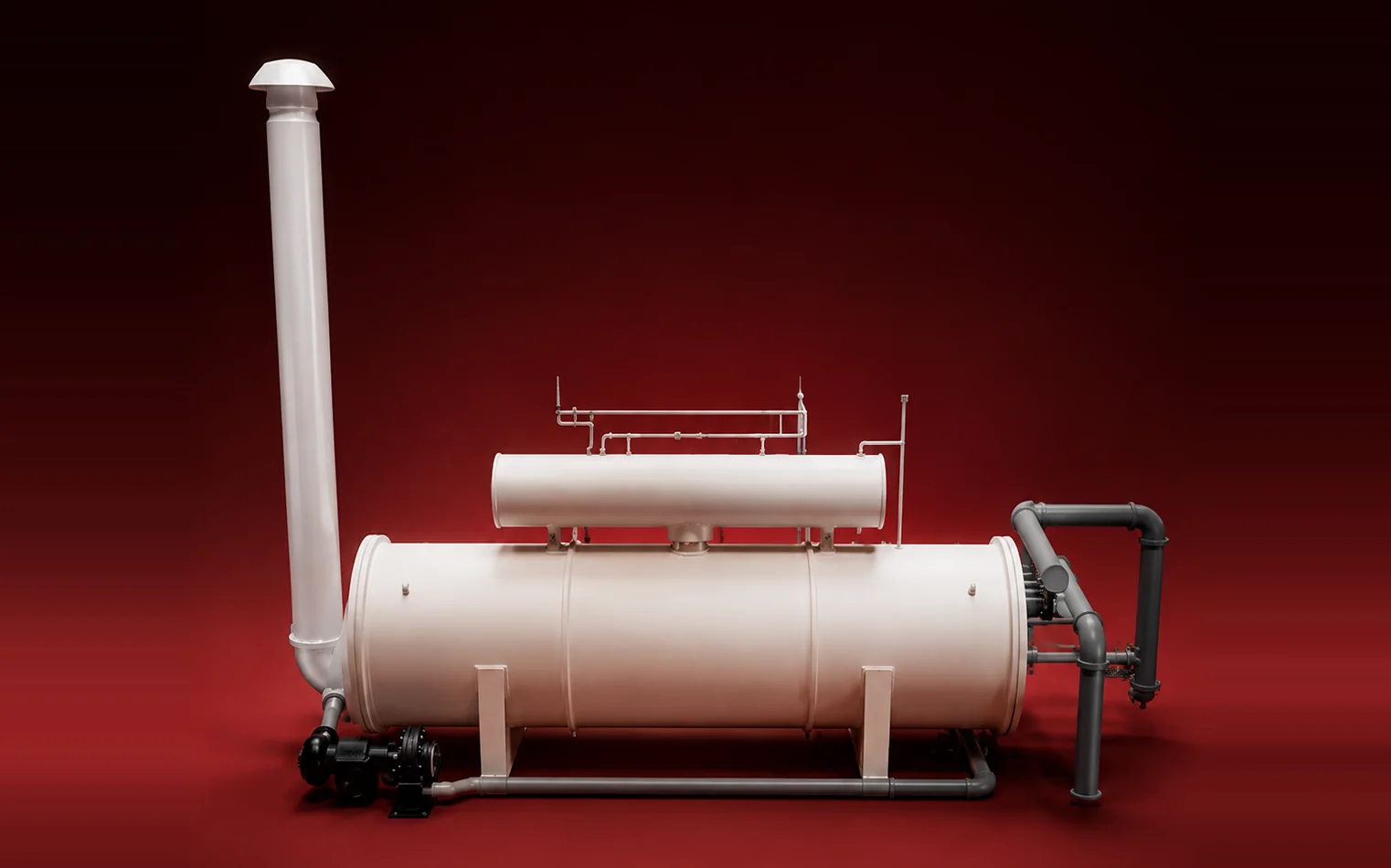
Hydrogen Production Facility
Electrolysis, drying, compression and high-pressure storage — the arrangement most green hydrogen skids share, and the safeguards that keep hydrogen out of its flammable range.
Standby. Stack idle, storage holding pressure, isolation valves closed.
Deviation library
Components
Explore the equipment
Produce hydrogen by electrolysis, dry and compress it, and hold it at pressure for dispensing — keeping every hydrogen-containing volume outside its flammable range and away from ignition.
Components
Electrolyser stackELY-201
Splits demineralised water into hydrogen and oxygen
Normally: Drawing rated DC load, cell voltages balanced
Gas/liquid separatorSEP-201
Separates entrained electrolyte from the hydrogen stream
Normally: Level in the middle of the glass
DryerDRY-201
Removes residual moisture before compression
Normally: Passing gas, dewpoint within spec
CompressorCMP-201
Raises hydrogen to storage pressure
Normally: Running on demand, discharge temperature steady
Storage tubesSTG-201
Holds compressed hydrogen for dispensing
Normally: Below maximum allowable working pressure
Pressure relief valvePSV-201
Relieves overpressure to a safe vent
Normally: Closed, set above operating pressure
Vent stackVNT-201
Discharges relieved hydrogen at height, away from people
Normally: Clear
Gas detectorGD-201
Detects hydrogen in air around the skid
Normally: Below alarm threshold
Operating states
Normal Production
Stack at load, compressor cycling on storage pressure, detectors clear.
Standby
Stack idle, storage holding pressure, isolation valves closed.
Purge
Nitrogen displacing hydrogen before maintenance — the step that keeps a volume out of the flammable range.
Failure scenarios and safeguards
MOREPressure
Hydrogen is relieved to atmosphere at height through the vent stack, and production stops.
Causes
- Compressor fails to stop on the pressure switch
- Dispensing valve closed against a running compressor
How it develops
- 01Compressor keeps running past its stop setpoint.
- 02Storage pressure rises towards the maximum allowable working pressure.
- 03Relief valve lifts and discharges hydrogen through the vent stack.
Safeguards
Relief valvePSV-201
Lifts at set pressure and routes hydrogen to the vent stack
If it fails: Storage is exposed to compressor discharge pressure with no relief path
Emergency shutdownESD-201
Isolates storage and stops production on demand
If it fails: Inventory keeps feeding a release
Unmitigated: Storage is taken above its design pressure with no relief path.
NOContainment
Production trips and the leak is limited to the volume already outside isolation.
Causes
- Fitting loosened by vibration
- Seal degradation at a compressor connection
How it develops
- 01Hydrogen escapes at a connection on the discharge side.
- 02Gas detection rises through the alarm threshold.
- 03Trip stops production and isolates the storage inventory.
Safeguards
Gas detection tripGD-201
Alarms at a first gas threshold, then trips the stack and compressor at a higher one
If it fails: A leak continues to accumulate with nothing calling for shutdown
Emergency shutdownESD-201
Isolates storage and stops production on demand
If it fails: Inventory keeps feeding a release
Unmitigated: A hydrogen cloud accumulates in a congested space with ignition sources present.