Techcopter Platform · 03
Industrial XR training,
built in Unreal Engine.
Licensed immersive training for industrial and oil and gas operations, built on the real equipment your people work with.
Crews and engineers meet the equipment, take it through its operating states, and work the failure cases — without the plant being in any of them, and without the journey to reach it.
The journey is the cost.
Familiarisation normally means getting people to the equipment: a site, a training centre, a shutdown window when the unit is finally available. The training goes to them instead, and the travel, the accommodation and the days away stop being the price of learning a machine.
The failure cases are the point, and you cannot run them.
No operator rehearses a flame failure on a live heater, or a tube rupture on a running exchanger. Those are exactly the conditions a crew has to recognise early. In XR they run as often as they need to, and the worst outcome is a restart.
Your equipment, not a stand-in.
The library below holds standard archetypes, and they are what the models on this site are drawn from — deliberately generic, so they teach the class of machine rather than anyone's facility. A licence is built around your equipment instead: your unit, your tags, your safeguards, and the operating envelope your procedures actually describe.
Every model on this site states “Reference model — not as-built” for that reason. A licensed build is the one that answers to your drawings.
What a crew works through.
Each piece of equipment carries its operating states and the deviations that matter on it. The states are how the unit is meant to behave; the deviations are the ways it stops behaving, each with the safeguards that are supposed to catch it. These are the scenarios in the library today.
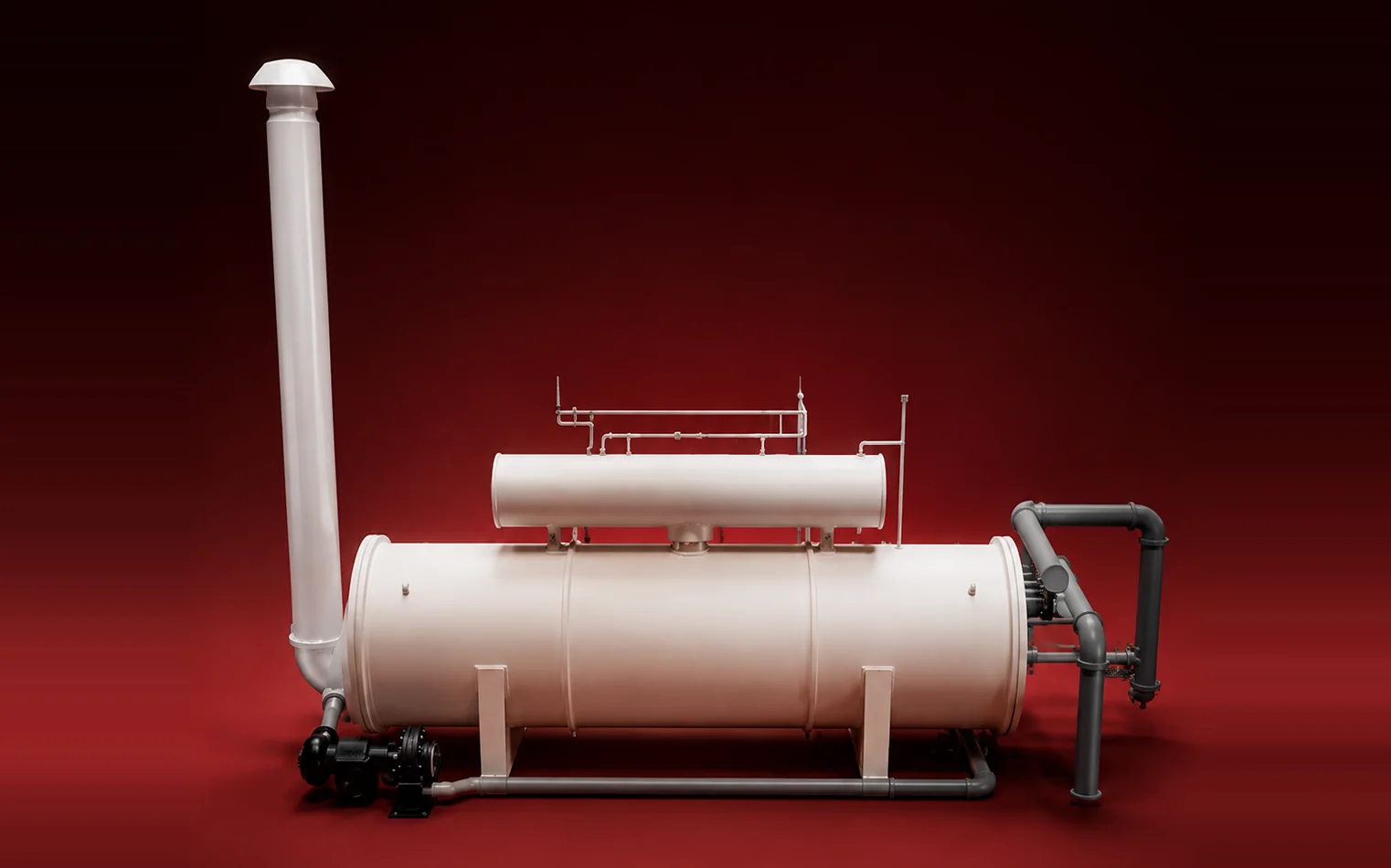
Water Bath Heater
HTR-101Operating states
- Startup
- Normal operation
- Shutdown
Failure cases
- LESSLESS levelLow level switch trips the burner before the exposed fire tube reaches damaging temperature.
- NONO flowHigh bath temperature cuts the burner, and the relief valve protects the coil against thermal expansion of trapped gas.
- MOREMORE temperatureHigh temperature trip cuts fuel; relief protects the shell and the low level trip provides a second line of defence.
- NOFlame failureFlame supervision closes the fuel valve on loss of flame and forces a full purge before any re-light attempt.
- OTHER THANCoil leakGas detection alarms and the operator shuts in the unit; relief protects the bath from the pressure of the released gas.
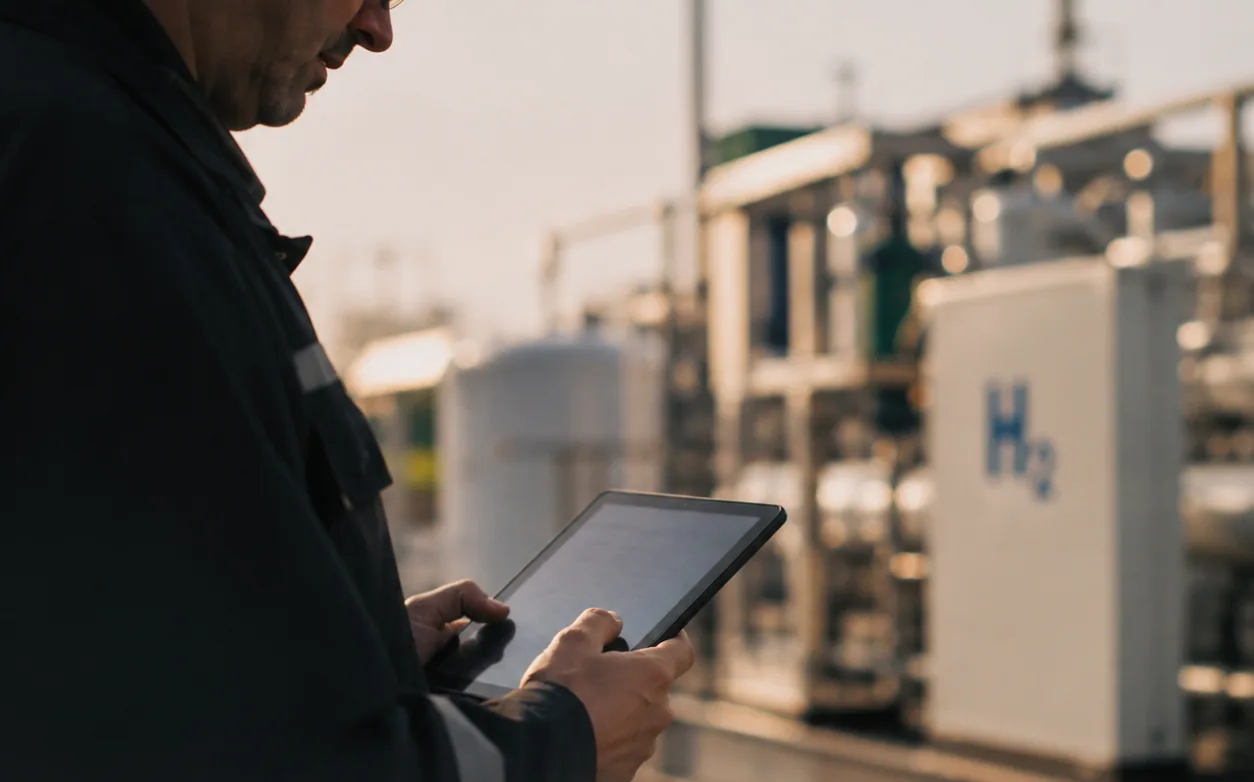
Hydrogen Production Facility
H2-201Operating states
- Normal Production
- Standby
- Purge
Failure cases
- MOREHigh storage pressureHydrogen is relieved to atmosphere at height through the vent stack, and production stops.
- NOHydrogen leakProduction trips and the leak is limited to the volume already outside isolation.
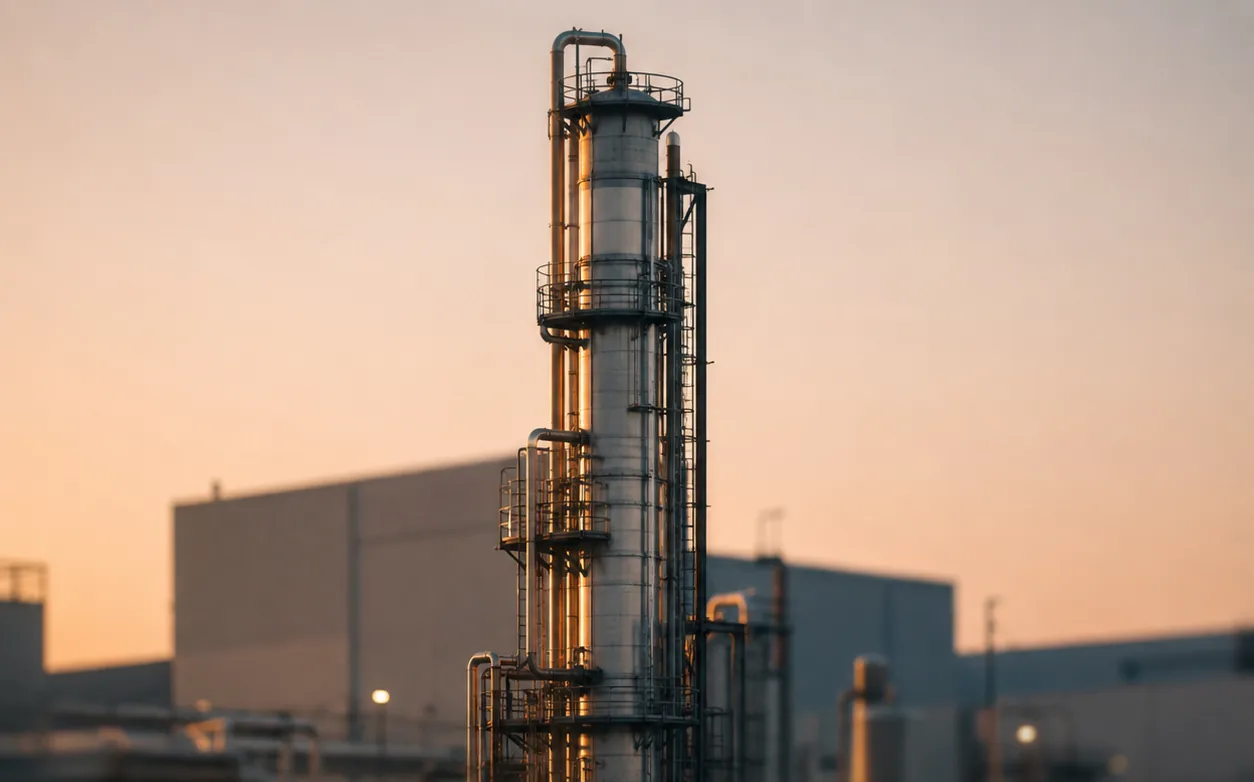
Petrochemical Plant
TRN-301Operating states
- Normal Operation
- Startup
- Shutdown
Failure cases
- MOREHigh separator levelFeed and compressor trip before liquid reaches the compressor suction.
- MOREColumn overpressureThe column relieves to flare and stays within its design pressure.
Automation Arm
RBT-401Operating states
- Automatic Cycle
- Reduced Speed Teach
- Safe Stop
Failure cases
- NOCell entry during cycleThe arm stops before the person is inside its reach envelope, and stays stopped until the cell is reset.
- NOLoss of drive powerThe arm holds position with its load, and the part stays in the gripper.
Shell & Tube Heat Exchanger
E-101Operating states
- Startup and warm-through
- Normal operation
- Reduced throughput
- Controlled shutdown
- Standby and isolation
Failure cases
- NONO tube-side flowLoss of flow shows first as the tube-side outlet temperature running away from its normal value — upward where the other stream is hotter, downward where it is colder — and the operator restores flow or takes the other stream off. Where the side has been blocked in, the thermal relief inside the isolation holds the pressure while that is done; and the isolation sequence is what should have prevented a liquid-full side being shut in against heat in the first place.
- LESSLESS heat transfer (fouling)The duty loss is visible as a drifting outlet temperature together with a rising pressure drop, and the exchanger is taken off line and cleaned at a planned opportunity rather than run to failure. Inspection at that opportunity is what establishes whether the tubes have thinned as well as fouled — the process data cannot show it.
- OTHER THANTube failure between the streamsPressure falling on one side while it rises on the other is the signature, and it is alarmed: the trip takes out the higher-pressure source, the exchanger is shut in and isolated, and where the unit was designed with margin across the interface, that margin is what the lower-pressure side is holding while it happens. Where there is no margin, the relief device is carrying the rupture flow on its own.
- AS WELL ASAS WELL AS — cross-contamination through a leaking tubeComposition monitoring or routine sampling of the receiving stream picks the ingress up while it is still small — pressure instrumentation will not, and should not be credited here — and the exchanger is isolated and the leaking tubes located, plugged or replaced. Where the pressure hierarchy was set deliberately, the leak has been running into the stream that can tolerate it rather than out into a utility.
- MOREMORE rate of temperature change (thermal shock)Controlled warm-through and cool-down, at a rate that is monitored rather than assumed, keeps the differential inside what the joints can carry; the outlet temperature alarm is what tells the operator that one stream has gone while the other is still running, which is the cause that arrives without warning. Any cycle known to have run too fast is followed by inspection aimed specifically at cracked tube-to-tubesheet joints and relaxed bolting.
- OTHER THANGirth joint leak to atmosphereThe weep is found by detection or on an operator round while it is still a weep; the exchanger is proved isolated, depressurised and drained before a bolt is touched, and the joint is remade with a new gasket and controlled tightening rather than nipped up in service.
What a licence covers.
- Your equipment modelled to the same schema the library uses: components, operating states, deviations and safeguards.
- The training built around it — familiarisation, operating states, then the failure cases.
- Assessment and completion records for the people who take it.
- Updates when the equipment or the procedure changes.
- —Headset hardware, which you buy and manage yourself.
- —A conformance certification. Techcopter implements and tests against a standard; that is not the same as a certificate from a certifying body.
Start from your equipment.
Tell us what the unit is and what your crews need to be able to do on it. There is no self-serve tier for a licensed build — it starts as a conversation.
The rest of the platform